Everything Homeowners Need to Know About EV Charger Installation
Electric vehicles are more popular than ever — and if you've recently made the switch (or you're thinking about it), one of the first things you'll want to figure out is how to charge your car at home. The good news? Home EV charging is easier than you might think, and it can save you a ton of time and money compared to relying on public charging stations.
In this post, we'll walk you through the different types of EV chargers, the benefits of charging at home, what installation costs look like, and why it's important to work with a licensed electrician to get the job done right.
Level 1 vs. Level 2 vs. DC Fast Charging: What's the Difference?
Not all EV chargers are created equal. Here's a simple breakdown:
Level 1 Charging uses a standard 120-volt household outlet — the same kind you plug your phone into. No special equipment is needed, which makes it the most convenient starting point. The downside? It's slow. You'll typically gain only 3–5 miles of range per hour of charging, which means a full charge can take a day or more.
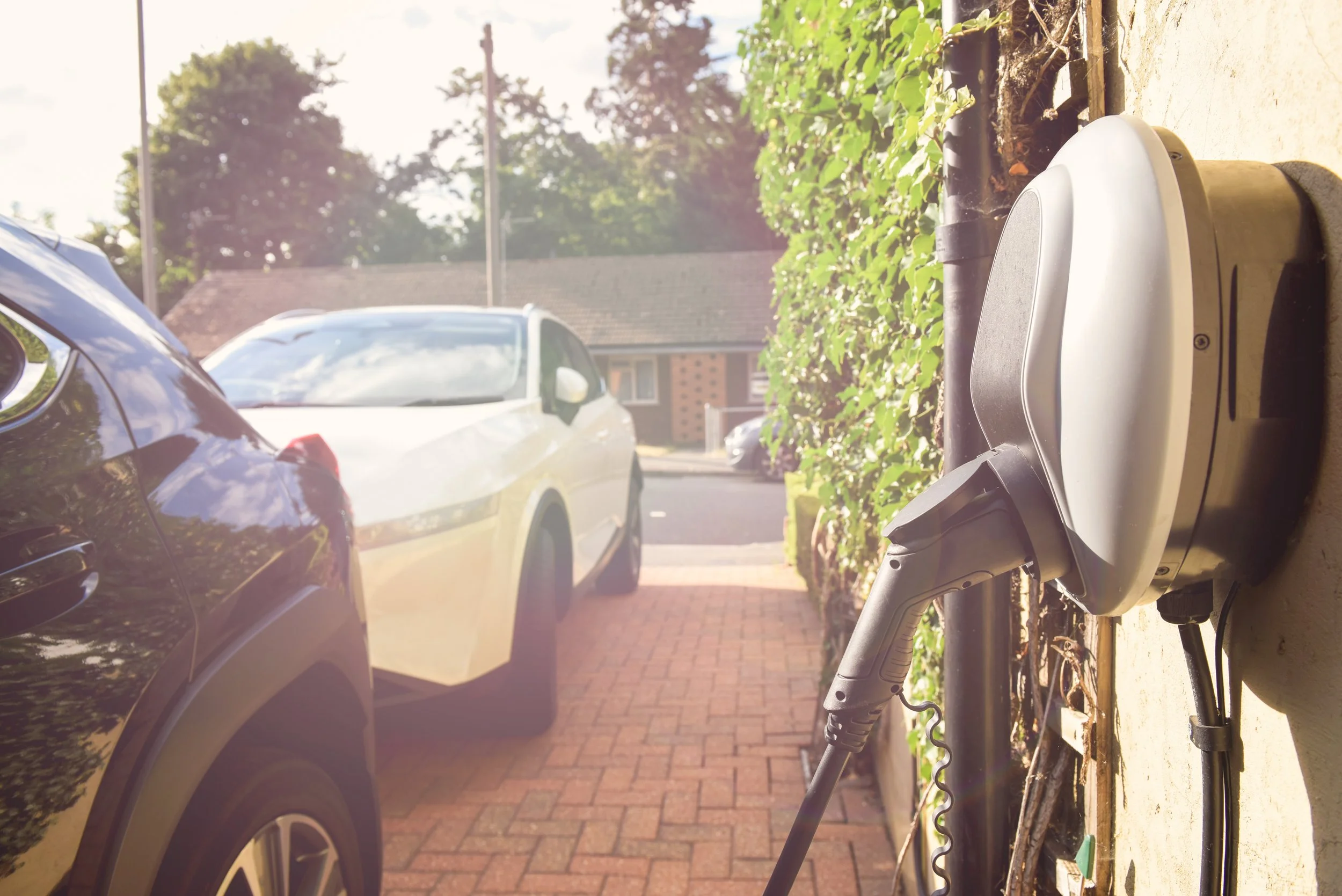
Level 2 Charging runs on a 240-volt circuit (like your dryer or oven) and is by far the most popular choice for homeowners. It charges 5–10x faster than Level 1, adding 20–30 miles of range per hour. Most EV owners can fully charge their car overnight with a Level 2 charger. This is the setup we install most often, and it's what we recommend for the majority of households.
DC Fast Charging is the kind you see at commercial charging stations. It can charge an EV to 80% in as little as 20–30 minutes — but these units require heavy-duty electrical infrastructure and significant upfront cost. They're generally not practical or necessary for home use.
For most homeowners, Level 2 is the sweet spot: fast enough to keep your car ready every morning, and perfectly suited for residential electrical systems.
The Benefits of Charging Your EV at Home
Once you have a home charger installed, you'll wonder how you ever lived without it. Here are some of the biggest perks:
Convenience. Plug in when you get home, wake up to a full charge. No more stopping at gas stations or hunting for a public charger.
Lower cost. Charging at home is significantly cheaper per mile than gasoline — and even cheaper than most public charging stations, especially if you charge during off-peak hours.
Better for your battery. Consistent, slower Level 2 charging at home is actually gentler on your battery over time compared to frequent DC fast charging.
Increased home value. A professionally installed EV charger is a desirable feature that can make your home more attractive to future buyers as EV adoption continues to grow.
Peace of mind. You'll always know exactly how much charge you have without depending on the availability of public infrastructure.
How Much Does EV Charger Installation Cost?
The cost of installing a home EV charger depends on a few factors, including the type of charger, the condition of your electrical panel, and the complexity of the installation. That said, here's a general idea of what to expect:
The charger unit itself typically runs between $300 and $900 for a quality Level 2 home charger.
Installation labor generally ranges from $200 to $600 depending on the work involved.
Panel upgrades, if needed, can add to the total cost — but many homes already have the capacity to support a Level 2 charger without any panel work.
All in, most homeowners pay somewhere between $500 and $1,500 for a complete Level 2 EV charger installation. There are also federal tax credits and local utility rebates available that can offset a portion of this cost — ask us and we can help point you in the right direction.
Why You Should Hire a Licensed Electrician
We know it can be tempting to look up a DIY tutorial and try to tackle this yourself — but EV charger installation is one job where hiring a licensed electrician really matters. Here's why:
Safety first. A 240-volt circuit is serious business. Improper wiring can create fire hazards, trip breakers repeatedly, or damage your vehicle's charging system.
Code compliance. Licensed electricians know local building codes and permit requirements. An unpermitted installation can cause headaches when it comes time to sell your home or make an insurance claim.
Warranty protection. Many EV charger manufacturers require professional installation to keep the warranty valid. DIY installs can void coverage if something goes wrong.
It's done right the first time. A licensed electrician will assess your panel, run the proper wiring, mount the unit securely, and test everything before they leave. No guesswork, no callbacks.
Ready to Get Your EV Charger Installed?
If you're ready to make home charging a reality, we'd love to help. We install Level 2 EV chargers for homeowners throughout the area — fast, clean, and up to code every time.
Give us a call today for a free quote. We'll assess your home's electrical setup, walk you through your options, and give you a clear, honest price with no surprises.
Your EV deserves a great charger. Let's get it set up right.